
THE PEOPLE
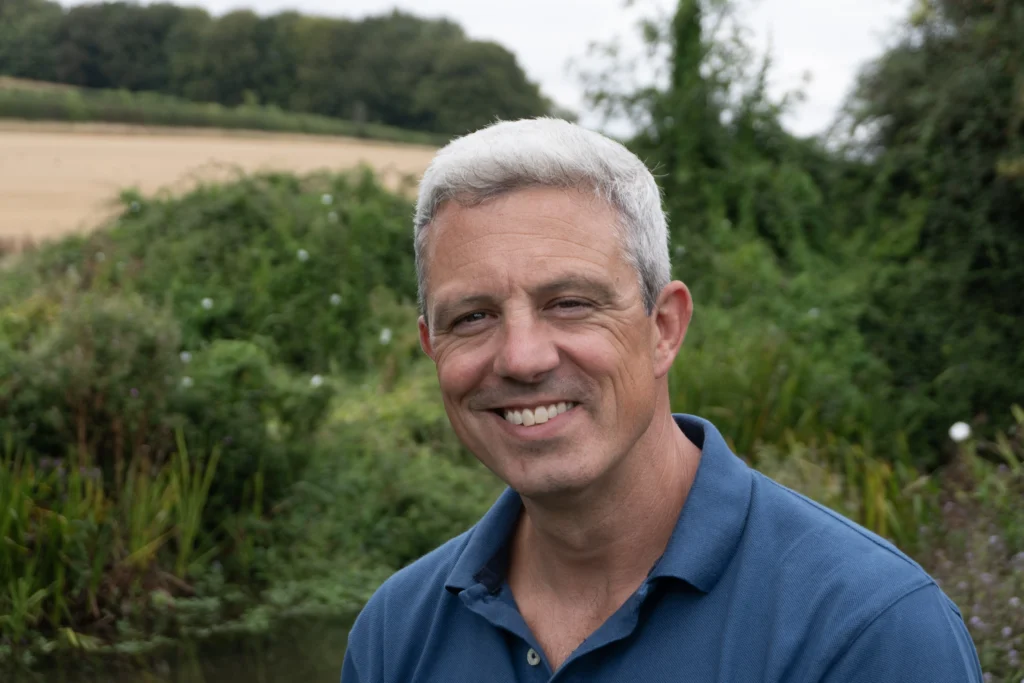
Martin de Retuerto

WHAT DRIVES HIM
Our rivers are the driving engine of thriving landscapes
Much of my career has been focussed on the recovery of our chalk rivers. With an early passion for freshwater conservation that continues to drive my work today.
As Director of Nature Recovery at Hampshire & Isle of Wight Wildlife Trust, I lead large-scale nature recovery programmes spanning rivers, wetlands, coastal habitats and marine environments. My expertise lies in freshwater and chalk river restoration, combining restoration, partnerships and strategic leadership.
I’ve worked across all sectors and communities to restore habitats, recover species and secure investment for nature. My approach is influenced by science and evidence, but focused on impact, innovation and trialling new approaches. I’m motivated by opportunities to connect people and nature and shift expectations towards a richer and wilder condition for our rivers and seas.
I’m motivated by the belief that nature’s recovery underpins the health of society and our economy. Our rivers are the driving engine of thriving landscapes.
PROTECTING OUR CHALK RIVERS
Martin on nature recovery
Hampshire & Isle of Wight Wildlife Trust for over 60 years has worked to restore and protect Hampshire’s chalk rivers through a combination of practical habitat management, river restoration, species recovery, catchment partnerships, community engagement and policy advocacy. The Trust’s involvement spans both hands-on stewardship of some of the county’s most important river and floodplain habitats and wider efforts to secure long-term protection for chalk streams across Hampshire and nationally.
A core strength of the Trust is its experience derived from the direct management of nationally important chalk river sites. For example, on the River Itchen, HIWWT manages Winnall Moors Nature Reserve and Hockley Meadows Nature Reserve, while on the River Meon it manages St Clair’s Meadow Nature Reserve. Through decades of management across multiple sites, the Trust has developed extensive expertise in floodplain restoration, wet grassland management, river restoration and species recovery. These reserves demonstrate how healthy chalk rivers and their floodplains function together, providing habitat for a rich range of wildlife while helping to improve water quality and natural river processes.
The Trust has also played a significant role in restoring Hampshire’s river wildlife. Notably, HIWWT led the reintroduction of the otter to the River Itchen in the early 1990s, at a time when the species had been largely lost from Hampshire’s rivers. The successful return of the otter is now recognised as one of the county’s major conservation success stories and illustrates the long-term commitment required to recover chalk river ecosystems.
Beyond its own reserves, HIWWT works across whole river catchments to improve river health. Through catchment partnerships and initiatives such as the Watercress & Winterbournes Project, the Trust collaborates with landowners, farmers, local authorities, water companies, community groups and environmental organisations to tackle issues such as pollution, habitat degradation and the impacts of water abstraction. This catchment-scale approach recognises that the health of chalk streams depends on activities throughout the wider landscape, not just within the river channel itself.
The Trust supports the monitoring and recovery of chalk streams through citizen science programmes such as Chalk Stream Champions, enabling volunteers to collect data on river condition and water quality. This helps build understanding of environmental pressures and provides evidence to support restoration and conservation action. Engaging local communities is an important element of HIWWT’s work. Through educational programmes and volunteering the Trust helps people understand the unique value of Hampshire’s rivers and encourages greater public involvement in their protection.
Alongside practical conservation, HIWWT is a leading voice calling for stronger legal protection for chalk streams. Through its Save Our Chalk Streams campaign, the Trust has advocated for improved planning protections, stronger safeguards against pollution and development impacts, and formal recognition of chalk streams as irreplaceable habitats. The Trust has worked with councillors, MPs and environmental partners to champion the long-term protection and recovery of these globally rare ecosystems.
Together, this work reflects a long commitment to Hampshire’s chalk rivers. Managing key reserves, restoring habitats, reintroducing lost species such as the otter, working with communities and partners across catchments, and campaigning for stronger protections, The Trust continues to play a leading role in ensuring that the county’s internationally important chalk rivers can recover, be wilder and thrive for future generations.